The Call of the Horizon: Why You Must Go Solo
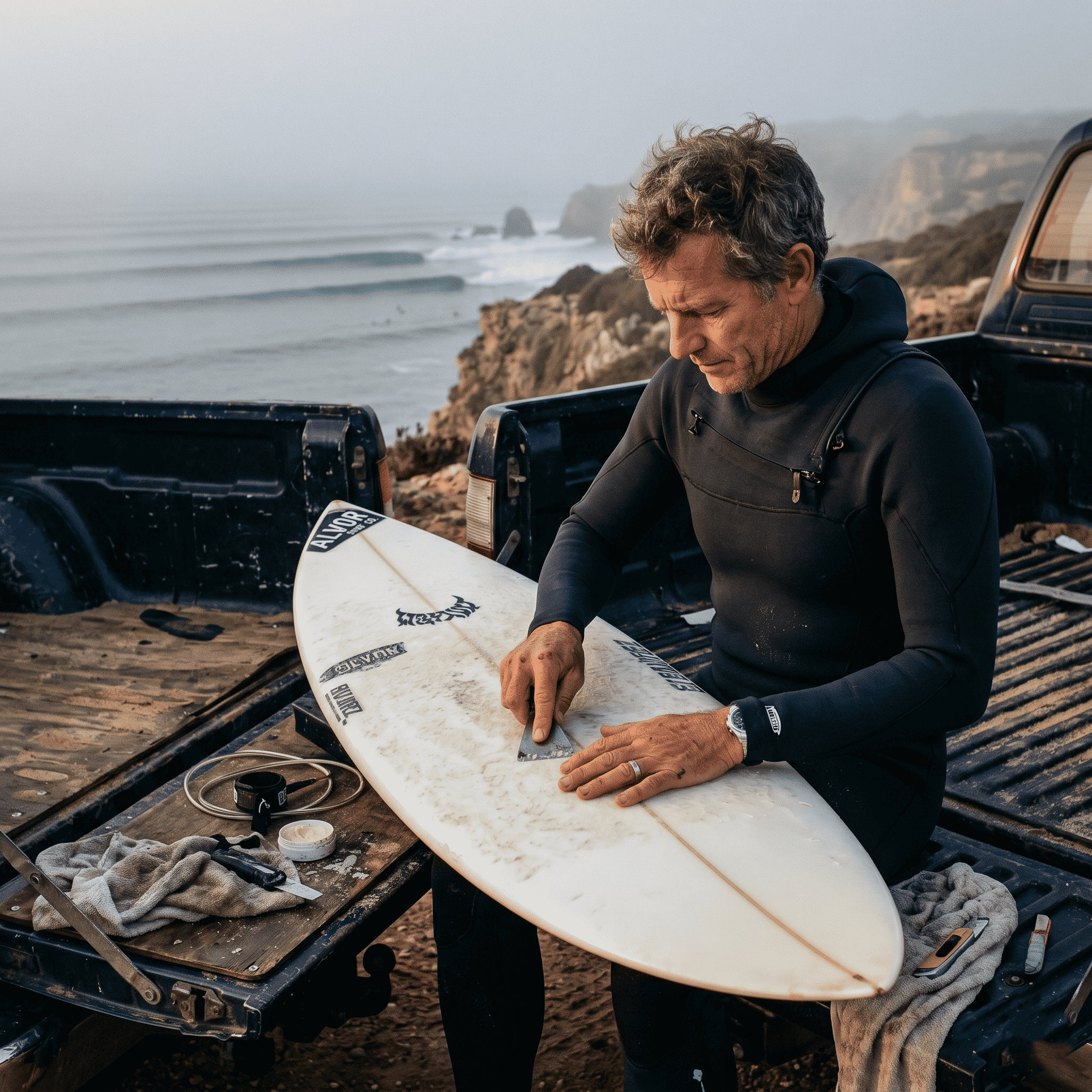
There is a specific, sacred moment that every solo surf traveler knows. It happens when you are sitting on the tailgate of a rented truck, the scent of coconut wax mingling with the metallic tang of a rusty tailgate, watching the first light of dawn paint the horizon. The air is cool, the water is a glass sheet, and the only sound is the rhythmic, heavy thud of a cleaning-set closing out on the reef. You have no one to check in with, no companion arguing about where to eat, and no coordinator diluting your focus. It is just you, your board, and the ocean.
In my twenty years of chasing swells across the globe, some of my deepest transformations didn’t happen when I was traveling with a crew. They happened when I was entirely alone, forced to read the ocean’s subtle rhythms without a safety net. Traveling solo makes you a better waterman because it strips away the noise. You become highly observant of the local currents, the shifting winds, and the social dynamics of the lineup.

If you are preparing for your first solo strike, or looking to refine your nomadic routine, you need a solid foundation. Before you book that flight, make sure to read The Ultimate Surf Travel Guide to lock down your general wave mechanics, fitness prep, and travel logistics.
When you travel solo, the ocean becomes your primary partner. This relationship requires absolute humility. I remember a trip to a remote reef pass in Indonesia where I pearled on my first wave, filled my ears with sand, and lost my board to a sharp outcrop of fire coral. With no friend on the shoulder to paddle over and laugh or offer a hand, I had to swim through the impact zone alone, calculating the rip currents with a racing heart. That afternoon taught me more about self-reliance than a decade of surf school. Solo surf travel is not merely a vacation; it is an active meditation and a test of character.
Choosing Your Sanctuary: Solo-Friendly Surf Destinations
Choosing the right destination as a solo traveler involves a delicate balance. You need waves that match your capability, a community vibe that allows you to plug in or stay isolated as you please, and reliable infrastructure so a broken fin or a mild case of reef rash doesn’t turn into a survival scenario. You want to avoid spots with notoriously hostile localism or setups that require a two-boat charter just to reach the take-off zone.
In my experience, certain zones of the world are practically custom-built for the solo surf. Central America offers warm water and highly accessible beach breaks, while Europe provides cultural richness alongside rugged, consistent beach and point breaks. Below is a comparative breakdown of three premier regions for the solo traveler, based on my personal trial-and-error over the years.
| Region / Destination | Wave Type & Difficulty | Solo Social Infrastructure | Safety & Localism Level | Best Season |
|---|---|---|---|---|
| Guanacaste, Costa Rica | Mellow beach breaks to fast reefs (Beginner to Advanced) | Excellent. Dozens of surf hostels, shared shuttles, and beachside cafes. | Very safe; welcoming lineups with minimal aggressive localism. | May to November (Green Season has the biggest swells) |
| Ericeira, Portugal | Heavy reef passes, point breaks, and beach sandbars (Intermediate to Pro) | High quality. Modern surf camps, co-working spaces, and ocean-minded cafes | Safe landside; lineups can be highly competitive at prime reef breaks. | September to May (Autumn is the golden window) |
| Bukit Peninsula, Bali | World-class, fast reef breaks over shallow coral (Intermediate to Expert) | Unmatched. Incredibly easy to meet people, cheap scooter rentals, endless surf camps. | Relatively safe; high crowd factor requires patience and deep etiquette knowledge. | April to October (Dry season trade winds) |
When selecting your destination, be honest with yourself about your current skill level. A solo trip is not the time to test your limits on a heavy, sucking reef break if you have only ever surfed soft beach breaks. If you are traveling alone, a shoulder injury or a severe wipeout becomes significantly more complicated to manage. Choose a location where you can confidently navigate the water on your worst day, not just your best.
The Art of Solo Logistics: Pack Light, Pack Smart
When you are traveling alone, you are your own sherpa. Navigating foreign bus terminals, walking down dirt roads, or haggling with taxi drivers becomes a nightmare if you are hauling a massive triple-board coffin bag along with a giant suitcase. Over the years, I have streamlined my gear down to a science. The goal is to pack everything you need to survive and repair your gear, without carrying a single ounce of dead weight.

First, let’s talk board selection. For a solo trip, a two-board quiver is the sweet spot. A high-performance daily driver for average-to-good conditions, and a slightly step-up board with extra volume for when the swell pulses. If you only bring one board, a single ding can ruin your entire trip. If you bring three, you will struggle to fit into standard sedan taxis or local tuk-tuks. Wrap your boards in bubble wrap or beach towels inside a lightweight, wheeled board bag. Pro-tip from my personal travels: slice pool noodles lengthwise and slip them over the rails of your surfboards before packing. It adds virtually zero weight but prevents 90% of airline transit damage.
- First Aid & Wilderness Medical Kit: Pack suture strips, antiseptic wash, broad-spectrum antibiotics, ear drops (swimmer’s ear can ruin a trip in three days), and plenty of waterproof medical tape.
- Ding Repair Essentials: Do not rely on local shops. Bring a small tube of UV-cure solar resin, a sanding pad, and heavy-duty duct tape or specialized ding tape for quick fixes between sessions.
- The Travel Essentials Bag: A high-quality dry bag (20L) is invaluable. It keeps your passport, phone, and wax dry during boat transits or tropical downpours.
- Fin Management: Bring a spare set of fins, a high-quality fin key (keep it on your keychain), and extra fin screws. Losing a fin screw in a remote town can sideline you for days.
When I tested various packing methods in remote areas of Morocco, I realized that less truly is more. If you can carry your board bag in one hand and a single backpack on your shoulders, you retain your mobility. This mobility is your safety net. It allows you to quickly change hotels, jump onto a boat, or walk away from a sketchy situation without feeling anchored down by excessive gear.
Lineup Diplomacy: Navigating Foreign Crowds Alone
Entering a new lineup alone is an exercise in social psychology. When you arrive at a surf break with a group of friends, you naturally bring an energetic footprint that can feel invasive to the locals. When you paddle out alone, you are a single observer. This is your greatest asset. Lineup diplomacy is about showing respect, reading the room, and earning your place in the rotation through patience rather than aggression.
My golden rule is the “Twenty-Minute Rule.” When you arrive at a new spot, do not immediately wax up and throw yourself into the water. Sit on the beach, find an elevated vantage point, and watch the water for at least twenty minutes. Look for the take-off zone, the sweep of the current, the hidden rock shelves exposed on the sets, and the social hierarchy of the lineup. Identify who the local heavy-hitters are, who is catching the most waves, and where the safest shoulder is located.
When you finally paddle out, do not head straight for the peak. Sit on the shoulder. Smile, nod to the closest surfer, and keep your hands quiet on your board. Do not paddle for the first set wave that comes your way, even if you are in the perfect spot. Let it go. Show the crowd that you are not there to vacuum up every wave. When you do eventually paddle for a wave, commit 100%, ride it cleanly, and kick out safely without putting anyone else in danger. One well-ridden wave executed with style and respect will earn you more access to the peak than an hour of aggressive jockeying.

Overcoming the Solo Mindset Challenges
Let’s speak plainly: solo travel is not always a glossy postcard. There will be evenings when the wind turns onshore, the swell drops, and you are sitting in a cheap room listening to the hum of a mosquito net, feeling incredibly lonely. The mental game of solo surf travel is just as demanding as the physical challenge of paddling through an eight-foot beach break.
To combat the inevitable dry spells of loneliness, you must learn to bridge the gap between solitude and community. Surf camps and co-living spaces are fantastic hubs for solo travelers. They offer a shared dinner table where you can swap stories about the morning’s glass-off, find surf buddies to split the cost of a boat charter, or simply connect with like-minded souls. However, do not let the comfort of a communal space prevent you from experiencing the local culture. Some of my most treasured travel memories involve sharing a simple meal of grilled fish with local fishermen who showed me secret pathways to empty setups
Use your solo time on land to rest, read, study the weather charts, and connect with your environment. The silence of a solo trip is where the magic lives. It forces you to slow down, to tune your internal clock to the rise and fall of the tide, and to appreciate the ocean not just as a sports arena, but as a living, breathing ecosystem.
Frequently Asked Questions
Is solo surf travel safe for beginners?
Yes, solo surf travel can be highly rewarding for beginners, provided you choose destinations with soft sand-bottom beach breaks and active surf schools, such as Tamarindo in Costa Rica or Weligama in Sri Lanka. It is highly recommended to stay at a dedicated surf camp where you have access to professional instructors and a built-in community to ensure your safety in and out of the water.
How do I handle my valuables while surfing alone?
This is one of the biggest challenges for solo travelers. Never leave your passport, electronics, or large amounts of cash in a bag on the beach. Use your accommodation’s security safe for high-value items. For your car keys, use a heavy-duty combination lockbox (such as a surf lock) attached to your vehicle’s tow hook, or carry a mechanical key on a lanyard inside your wetsuit key pocket.
How do I avoid localism as a solo surf?
The best way to avoid localism is to show profound respect. Paddle out slowly, sit on the shoulder, watch the rotation, and greet the locals with a genuine smile. Never drop in on anyone, never snake someone inside, and avoid paddling back out directly through the take-off zone. If a local expresses frustration, apologize immediately, do not argue, and give them plenty of space.
What should I do if I get injured while surfing alone?
Always identify the nearest medical facility or surf camp before you enter the water. Carry a basic first aid kit in your vehicle or day pack. In the water, if you find yourself in trouble, stay calm, float with your board, and signal for help by waving one arm slowly above your head. This is why staying at surf-centric accommodations is crucial; they notice if you do not return from a session.